Showing posts with label Dulse. Show all posts

Saturday, October 11, 2008

Dulse Tapenade!


This is the first sea vegetable recipe that I've tried so far. I figured it would be wise to bulk up on info before I started integrating the sea veggies into my diet, but I couldn't resist making this recipe right away. Its really tasty and took me 5 minutes at most. I've been eating it spread on rice crackers or on bread. There is a slight fishy taste, so if you're not used to that (I'm not), it might take a little bit getting used to. You can read about dulse here.

The recipe came from the book, Sea Vegetable Celebration, and is also found here on Maine Coast Sea Vegetables' website.


Dulse Olive Tapenade

Serves 2–3


Ingredients

2 to 3 cloves of garlic
One 6 oz can pitted black olives, drained

1 Tbsp olive oil

1/3 cup Dulse Flakes

Put the garlic cloves, olives, oil and dulse in the work bowl of a food processor, and puree until smooth. Or you can squeeze the garlic in a press and hand chop the olives until very fine, then stir in the olive oil and dulse.

Per serving: Calories 115, Protein 1 g, Fat 15 g, Carbohydrates 4 g, Fiber 25 g, Calcium 59 mg, Sodium 536 mg

Tuesday, September 30, 2008

Hello My Name Is: Dulse


images from algaebase.org

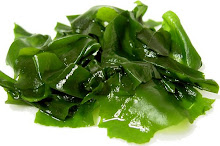
Dulse (pronounced as it looks) is a red algae that grows on the northern coasts of the Pacific and the Atlantic. Its often called "red kale" or the "beef jerky of the sea". It has a chewy, stringy texture and a nut-like flavor.

Growing habitat: Dulse fronds are 6 to 12 inches long. The plant attaches to rocks by a "holdfast," and grows in cold, turbulent waters on rocky shores (Pacific & Atlantic). Harvesting occurs from May through October when the plants are picked by hand during low tide and then sun dried.

Aliases: Palmaria palmata, Crannogh, Darusu, Dulce, Dillisk, Goéman à Vache, Neptune's Girdle, Raa-ts, Red Kale, Saccha, Sea-grass, Sheep Dulse, Shelldulse, Sol, Sou Sol, Tellesk, Water Leaf

Nutrition: Dulse is a good source of vegetable protein, iron, potassium, magnesium, iodine, chlorophyll, enzymes, Vitamin A, Vitamin B's, and dietary fiber. It is said to have the highest concentration of iron of any food.

History:
Dulse has been been harvested for thousands of years in England, Ireland, Scotland, and Iceland. At the beginning of the 20th century it was often found in railroad stations as a snack.

Uses: Dried dulse can be chewed as is, pan fried, baked, chopped up and and added to soups or salads. Crumbled up it can act as a seasoning. Most people prefer to eat it not cooked because it gets mushy quickly. It can be bought in its whole form or as seasoning.

Preparation: If you're preparing to cook dulse: inspect for small shells; quickly rinse to tenderize and reduce saltiness; and chop or snip for use. More info can be found here.

Recipes:
Garden Salad with Dulse and Walnuts
Popcorn with Dulse

Chef Ken Bereron's Serendipity Smoked Dulse and Red Miso Dressing (scroll down)
American Dulse Pesto Sauce

Avocado Dip with Dulse Flakes

Dulse Chickpea Salad

Dulse Olive Tapenade

Dulse Vegetarian Pizza