Showing posts with label Recipes. Show all posts

Friday, November 28, 2008

Sea Veggies at Alternative Food Fair


wild toasted nori recipe (courtesy of Andrew at Pacific Wildcraft) click image to see larger version

The Alternative Food Fair last week was a success! Some of my classmates are also doing projects on alternative food sources so we pooled together to introduce our school to these foods. I brought some local wild toasted nori snacks to pass out and everyone loved them. Some people were hesitant to try sea veggies, but were really happy they did. I think it raised awareness that sea vegetables can actually be something that's tasty and a good snack. I passed out the recipe cards (see above) so that people could make nori snacks at home.

Monday, November 10, 2008

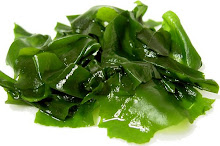
Wakame In Soup!

Last night I made a fairly normal pot of vegetable chicken soup. But instead of adding land greens (like spinach or chard) at the end like I would normally do, I added wakame for an iodine and vitamin boost. It was super easy. Here's what I did:

1. Rinsed under cold water 5 pieces of dried wakame
2. Soaked the pieces in a bowl of water for 20 minutes
3. Drained the bowl and removed the wakame- it really grew in size!
4. Cut out the midrib (its distinctive and harder than the rest of the frond)
5. Cut the wakame into bite size pieces
6. Added it to the soup when it had 15 minutes left to cook

The soup smelled a little bit more "sea-like," but I didn't notice any difference in the taste. I really liked the texture + color of the wakame. I could have saved the soaking water to add to the broth, but I wasn't sure if it would jive with my soup recipe.

Friday, November 7, 2008

Hello My Name Is: Bladderwrack


images from algaebase.org

Bladderwrack, is a brown algae easily recognizable by its small gas filled vesicles that occur in pairs.

Aliases:
Fucus vesiculosus, black tang, rockweed, bladder Fucus, sea oak, black tany, fucus tips, cut weed and rock wrack

Growing habitat: Bladderwrack grows on the northern Atlantic and Pacific coasts of the United States and on the northern Atlantic coast and Baltic coast of Europe.

History: Bladderwrack was the original source of iodine, discovered in 1811 and used to treat goitre (caused by iodine deficiency). Bladderwrack was also historically used in a healing tea.

Nutrition: Bladderwrack has varying levels of iodine and is thought to be a good source of iodine. Contains magnesium, protein, vitamins A,C,K, and E, bromine, zince, iron, potassium.
Uses: Great in quick cooking dishes. Do not use in long cooking dishes (will turn gelatinous).

Preparation: Rinse under cool running water for a minute and then soak in water for 20 minutes. Chop/use according to specific recipe.

Recipes:
Bladderwrack Tea

Thursday, November 6, 2008

Hello My Name Is : Sea Palm


images from algaebase.org

Sea Palm is a brown algae that is very mild tasting with a soft and crunchy texture. As its name suggests, it looks similar to a mini palm tree.

Aliases: Postelsia palmaeformis, palm seaweed

Growing habitat: Sea palm thrives in tubulent waters of the North America, harvested by hand from April thru June. The more turbulent the waters may increase nutrient absorbtion, and reduce competition for rock position. Sea Palm grows on rocks attached by its root-like holdfast. It spends most of its time growing exposed to air due to its long stipe (stem). It can grow to about 2 ft in height and at the top of its stipe grows about 100 leaf-like blades. When in the formation stages, sea palm is green but eventually turns to brown as it matures.

Important Notes: It is illegal to recreationally harvest this sea vegetable. Cutting the stipe prior to spore production can threaten populations. Licensed harvesters use a specific method that reduces impact. Due to their restricted habitat, short life span, and limited power to regenerate, they cannot tolerate heavy harvesting.

History: Before Europeans entered the area, Sea Palm was know by the natives as Kakgunu-chale. It was first scientifically described by Franz Josef Ruprecht in 1852.

Nutrition: Good source of Vitamin A & D, other than that there seems to be little nutritional analysis mentioned anywhere

Uses: Both the blades (leaf-like) and the stipe (less commonly) are edible. Sea palm is delicious raw or sautéed and added to soups or salads.

Preparation: Cover sea palms with water and soak for 20 minutes. Separate the fronds from the stipe and use according to recipe.

Recipes:
Sea Palm Lasagna
Sea Palm with Peanuts
Sea Palm and Cucumber Salad

Sea Palm Salad

Monday, November 3, 2008

Hello My Name Is : Laver


images from algaebase.org

Laver, (Wild Nori) is harvested in the North Atlantic (Ireland, Wales, Maine) and in Northern California. Unlike nori, its not sold in sheets. Fresh, it looks lettuce-like.

Aliases: Porphyra umbilicalis, P. leucosticta, p. perforata, P. Nereocystis, wild nori, purple laver, sloak, karango, chichoy

Growing habitat: Laver grows in cold, mid-intertidal zones of the Northern & Southern hemispheres. It grows off of rocks or rockweed.

Nutrition: High in B vitamins, iodine, protein, (30% protein), vitamins E + C

History: Laver cultivation is believed to go back to ancient times in Wales and Scotland. Laverbread (made from laver) is a traditional welsh delicacy.

Uses: used in laverbread, can be added to steamed veggies to add extra taste, can be pan/oven roasted and added to other dishes

Preparation: If roasting, make sure to pull apart the leaves and check closely for tiny shells (remove these). Roast in an 250–300° F oven for 5 to 8 minutes on a cookie sheet or heat in a cast iron skillet on medium high heat until crispy.

Recipes:
Laver Mushroom Tofu Scramble

Wild Laver Onion Omelette

Toasted Dried Sea Laver
Buckwheat Noodles With Laver

Sunday, November 2, 2008

Hello My Name Is : Alaria


images from algaebase.org

Alaria (ah-LAR-ree-yah) is a kelp that is a salty version of wakame that grows in Ireland, Great Britian, Greenland, Scotland, Iceland, Faroes, Norway, France, Helgoland, Netherlands, Alaska, Labrador, Maine and Massachusetts. It is used in soups, stews, casseroles and usually comes cut into strips.

Aliases: Wild Atlantic Wakame, Alaria esculenta {N. Atlantic}, bladderlocks, tangle, winged kelp,

Growing habitat: Its olive brown fronds grow btw 6 and 12 feet and it has a midrib with wavy membranes. Alaria generally grows on rock in very exposed places often forming a band at low water and in the shallow subtidal, but also occurring in tidal pools in the lower shore.

Nutrition: Its comparable to sesame seeds in terms of its calcium content, has high vitamin A (similiar to spinanch), good iron, potassium, and magnesium.

Uses: Can be used interchangeably with wakame (but use 1/3 less alaria than wakame). It also takes longer than wakame to cook. Maine Coast Sea Vegetables has more info here.

Preparation: Alaria requires a lot of soaking and rinsing to tenderize. Soak for 30 minutes, drain water and then soak again for another 30 minutes.

Recipes:
Alaria Miso Soup
Alaria Seafood Chowder
Rice Tomato Soup with Alaria

Grilled Oysters Wrapped in Alaria
Alaria Chips

Wednesday, October 29, 2008

Hello My Name Is : Arame


photos from algaebase.org


Arame, (AIR-a-may) meaning "rough maiden" is a species of kelp that grows on the Pacific coast of north and South America as well as in Japan and China. Because it has a mild, sweet flavor and is a good introduction to sea vegetables. It comes in thing threadlike brown strands and superficially resembles hijiki.

Aliases: Eisenia bicyclis, E. arborea

Growing habitat: Arame grows below the tide line. It has 12 inch long wavy fronds that are about 1/2 inch wide and grows on the rocks below the water line. The fronds are usually sliced into thin thead like strips that make them look a lot like hiziki.

History: Arame was traditionally harvested my Japanese women divers

Nutrition: Arame is a rich source of calcium, zinc and iodine.

Preparation: Soak dried arame in fresh water for 5-15 minutes and drain. Avoid oversoaking because arame can quickly lose its flavor.

Uses: Can be substituted for hijiki in any recipe. Can be added to soups/stew, sauteed with land vegetables, steamed, or used in salads.

Recipes:
Hiziki or Arame with Carrots and Onions
Japanese Arame Salad
Kale with Seaweed, Sesame and Ginger

Arame Salsa
Arame with Dried Lotus Root
Arame Stuffed Mushroom Caps

Sunday, October 26, 2008

Hello My Name Is: Hijiki


photo from algaebase.org

Hijiki, (he-JEE-key) is a porous brown sea vegetable that is not commonly seen on the menus of Japanese restaurants since it's used mostly for homely home cooking. It comes in dried form and when reconstituted swells to about 5 times its original weight. Hiziki takes years to mature.

Aliases: hiziki, Hizikia fusiforme, chin tsai, nongmichae, pig's foot vegetable

Growing habitat: Hiziki grows wild in shallow waters on the rocky coastlines of Japan, Korea, and China.

Nutrition: Hjiki has more calcium than other dried food source as well as having a high protein count. It is also high in fiber, calcium, potassium, vitamin B2 (riboflavin), and magnesium

History: Hiziki has been a traditional part of the Japanese diet for centuries. It is believed to enhance hair quality, strengthening it, and adding luster. Many Japanese credit eating of hiziki for their lustrous black hair and Japanese girls were told to consume bowlfuls of it.

Uses: Best eaten with other SVs,

Preparation: Dont' start with too much since it will quadruple in size! Wash under cold water and soak for an hour, rinse well (make sure to get rid of any sand) and discard soaking water. Be careful to press out any excess water. To use in grain dishes, stuffing, salads, burgers, or croquettes, boil the hiziki for 15 to 20 minutes prior to combining with the other ingredients. For hiziki and vegetable side dishes, cook the hiziki for 25 to 35 minutes with vegetables and season with Shoyu Soy Sauce near the end of cooking.

Additional Notes:
see post about arsenic & hijiki. Four countries have issued warnings about hijiki, but none have banned it.

Recipes:
Simmered Hijiki Recipe
Chang Chang Hijiki Salad
Hiziki Sauté
Braised Hiziki with Sweet Potatoes & Black Soybeans

Tuesday, October 14, 2008

Hello My Name Is : Kombu


images from algaebase.org & http://www.bichel.dk & http://z.about.com/

Kombu (COME-boo) is a long brown and thick sea vegetable from the kelp family (genus Laminaria). It is an important ingredient in Japanese, Chinese and Korean cultures and an essential ingredient of dashi, a flavorful stock.

Aliases: konbu, dashima, laminaria

Growing habitat: It is found on almost every coast. All parts of the plant are used and the broad leaves grow up to thirty-three feet in length! Kombu is usually harvested in the summer with long hooked poles and dried in the sun.

Nutrition:
rich in protein, calcium, iodine, magnesium, iron and folate. kombu also provides healing and soothing mucilages that coat the lower digestion tract relieving peri-anal inflammation, colitis, and constipation.

History:
Kombu has been used in Japan dating back to the Jōmon period (from 14,000 BC to 400 BC). In the 1960's kombu arrived in the U.S. due to the influence of the macrobiotic diet. Currently in Japan, special boutiques sell nothing but kombu and kombu products, of which there are more than 300!

Uses: Kombu is very mild in flavor and can be added to soups, cooked with beans (helps tenderize them + add nutrients+ speed cooking time + make more digestible), eaten raw, pickled, crumbled up and used as a seasoning,

Preparation: Wash dried kombu under running water to eliminate any sand or extra salt (optional). Dried kombu needs to be simmered for at least 20 minutes to soften it and flavor the liquid. If used only for flavoring stock, the kombu itself is removed from the simmer liquid at the end of cooking and discarded.

Recipes:

Kombu Dashi (Traditional Japanese Soup Stock)

Sweet Wakame and Ginger Kale Salad
Noodles & Broth
Land and Sea Vegetable Salad

(Pickled) Garlic in Kombu Soy Sauce Tsukemono
Lightly Pickled Cucumbers and Wakame Sea Vegetable

Saturday, October 11, 2008

Dulse Tapenade!


This is the first sea vegetable recipe that I've tried so far. I figured it would be wise to bulk up on info before I started integrating the sea veggies into my diet, but I couldn't resist making this recipe right away. Its really tasty and took me 5 minutes at most. I've been eating it spread on rice crackers or on bread. There is a slight fishy taste, so if you're not used to that (I'm not), it might take a little bit getting used to. You can read about dulse here.

The recipe came from the book, Sea Vegetable Celebration, and is also found here on Maine Coast Sea Vegetables' website.


Dulse Olive Tapenade

Serves 2–3


Ingredients

2 to 3 cloves of garlic
One 6 oz can pitted black olives, drained

1 Tbsp olive oil

1/3 cup Dulse Flakes

Put the garlic cloves, olives, oil and dulse in the work bowl of a food processor, and puree until smooth. Or you can squeeze the garlic in a press and hand chop the olives until very fine, then stir in the olive oil and dulse.

Per serving: Calories 115, Protein 1 g, Fat 15 g, Carbohydrates 4 g, Fiber 25 g, Calcium 59 mg, Sodium 536 mg

Friday, October 10, 2008

Hello My Name Is: Nori


images from wikipedia.org &

Nori, (NOR-ee) processed (and farmed) red algae Porphyra is typically what westerners envision when they think of sea vegetables. It is used to roll suishi and onigri. It also has the highest protein of all sea vegetables (between 25-28% protein).

Growing habitat: Nori grows close to the shoreline in sheltered inlets that are infused with fresh water. It grows wild in many parts of the world but in the Far East it is exclusively cultivated. It is grown in the ocean attached to nets at the surface of the water and is mechanically harvested 45 days after it seeds. The algae is harvested and then made into sheets by a process of shredding and rack drying. Harvesting can be done either by hand or by suction machines.

Important Buying Info: The less expensive the nori, the lower quality it is. The highest quality nori is hand harvested. It can be bought raw or toasted. Cheap types of Nori are sometimes artifically dyed and chemically treated. Do not freeze nori— it becomes inedible when thawed.

Nutrition:
high in fiber, protein, calcium, minerals, and vitamins A, B, C

History:
Nori dates back to the 8th century and is now a two billion dollar industry in Japan

Uses: Nori is typically used to roll suishi or onigiri or as a garnish for soups. It can be eaten by itself as a snack. Nori is also used to feed saltwater aquarium fish and algae eaters such as hermit crabs.

Preparation: If you buy raw nori, you need to toast it before using (carefully over an open flame works) until it turns a bright green color. Otherwise roll or crumble it up!

Recipes:

Winter Nori Roll (raw & vegetarian)
Cucumber Nori Rolls

Nori Rice Salad

Tuesday, September 30, 2008

Hello My Name Is: Dulse


images from algaebase.org

Dulse (pronounced as it looks) is a red algae that grows on the northern coasts of the Pacific and the Atlantic. Its often called "red kale" or the "beef jerky of the sea". It has a chewy, stringy texture and a nut-like flavor.

Growing habitat: Dulse fronds are 6 to 12 inches long. The plant attaches to rocks by a "holdfast," and grows in cold, turbulent waters on rocky shores (Pacific & Atlantic). Harvesting occurs from May through October when the plants are picked by hand during low tide and then sun dried.

Aliases: Palmaria palmata, Crannogh, Darusu, Dulce, Dillisk, Goéman à Vache, Neptune's Girdle, Raa-ts, Red Kale, Saccha, Sea-grass, Sheep Dulse, Shelldulse, Sol, Sou Sol, Tellesk, Water Leaf

Nutrition: Dulse is a good source of vegetable protein, iron, potassium, magnesium, iodine, chlorophyll, enzymes, Vitamin A, Vitamin B's, and dietary fiber. It is said to have the highest concentration of iron of any food.

History:
Dulse has been been harvested for thousands of years in England, Ireland, Scotland, and Iceland. At the beginning of the 20th century it was often found in railroad stations as a snack.

Uses: Dried dulse can be chewed as is, pan fried, baked, chopped up and and added to soups or salads. Crumbled up it can act as a seasoning. Most people prefer to eat it not cooked because it gets mushy quickly. It can be bought in its whole form or as seasoning.

Preparation: If you're preparing to cook dulse: inspect for small shells; quickly rinse to tenderize and reduce saltiness; and chop or snip for use. More info can be found here.

Recipes:
Garden Salad with Dulse and Walnuts
Popcorn with Dulse

Chef Ken Bereron's Serendipity Smoked Dulse and Red Miso Dressing (scroll down)
American Dulse Pesto Sauce

Avocado Dip with Dulse Flakes

Dulse Chickpea Salad

Dulse Olive Tapenade

Dulse Vegetarian Pizza

Monday, September 29, 2008

Hello My Name Is: Wakame


Images from algaebase.org

Wakame, (meaning "young girl" ) (Wa-KAMAY) like all sea vegetables is a type of algae. Wakame is specifically a type of (edible) kelp. that's been grown for centuries by Korean and Japanese sea-farmers. Its blades are 2 to 4 feet long. Wakame is extensively used in miso soup.

Aliases: Alaria Marginata, Undaria pinnatifida,

Growing habitat: Wakame is native to Japan and thrives in turbulent waters. The plants will grow up to 20" long in water up to 40' deep. Harvesting is mostly in the spring from boats with the use of a rake or pole.

Nutrition: Wakame has high levels of protein, calcium, iodine, magnesium, iron and folate. It is close in nutritional value to Kombu.

Uses: Can be put in soups or used in salads; used in miso soup; roasted; deep fried; or eaten fresh. Like Kombu, it can also be used to aid with softening other foods (like beans).

Preparation: Rinse under cold water and soak dried wakame in a bowl of water to rehydrate for about 30 minutes (note: will grow about 10 times of what it was dried) until soft. Remove from water and reserve water for broth — the water contains a lot of nutrients. Cut out the central vein(rib) and chop according to recipe.

Recipes:
Cucumber and Wakame Seaweed Salad (Sunomono)
Seaweed Salad
Miso Soup
Cool Weather Miso Soup